
Buying a Dark-Skin TPE Doll: Check the Swatch, Makeup, and Staining Risk
“Black” sounds like a very clear filter. Put the swatches from several brands side by side, however, and the label quickly becomes much broader than it first appears.
One brand’s Black may be close to dark brown, while another may be noticeably deeper. Undertone, saturation, and surface finish can also differ. Add facial makeup, body coloring, and photographic lighting, and two products carrying the same color name can look very different.
So when choosing a black sex doll, the category label is useful for narrowing the search, but it should not replace the manufacturer’s own swatches and photos of the specific product.

“Black” Is Not an Industry-Standard Shade
Different manufacturers have their own skin tone systems.
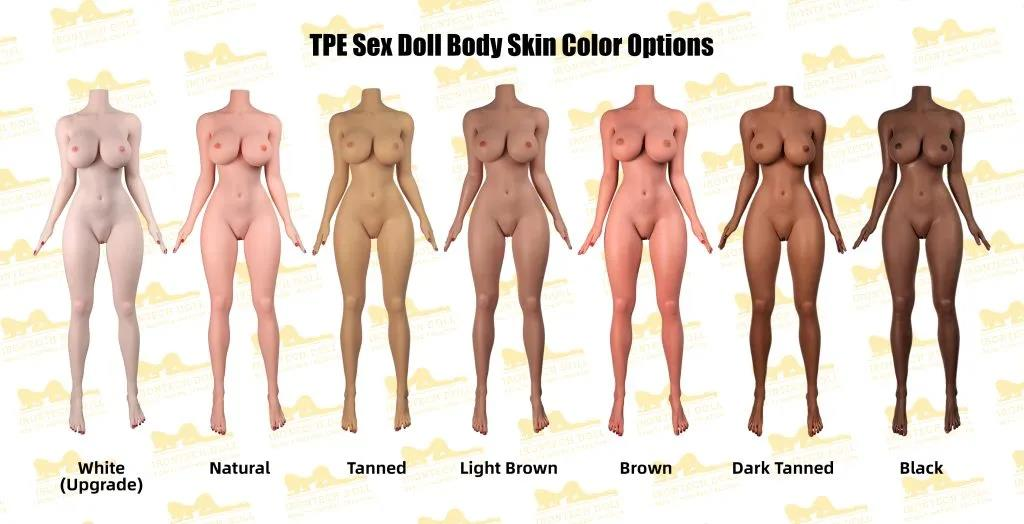
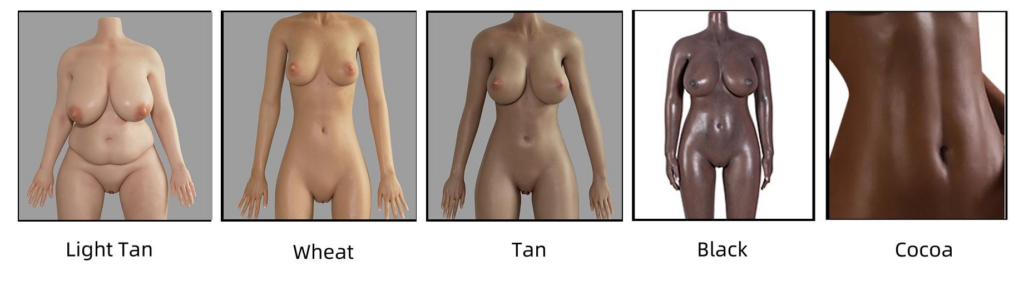
Irontech’s TPE skin-tone options include White, Natural, Tanned, Light Brown, Brown, Dark Tanned, and Black. Starpery uses a different set of labels, including options such as Same as Photo, Light Tan, Wheat, and Tan.
Different names are easy enough to understand; identical names are where confusion often begins. Two brands may both offer a shade called “Black” without producing the same color. Materials, formulations, and color standards vary by manufacturer, so the most reliable approach is to use each brand’s own swatches and finished-product examples.
If you like the dark skin tone shown in a Brand A product photo, simply selecting “Black” from Brand B does not guarantee a similar result.
When comparing across brands, avoid trying to match color names one-to-one. Instead, confirm which shade is shown in the product photos, whether the head and body use the same shade, and whether the photographed result includes additional body detailing or makeup.
Confirming those details before production is far more useful than trying to work out afterward why the finished product does not match the “Black” shown in a reference photo.
Confirm the Base Skin Tone and Makeup Separately
Product photos often blend together the material’s base tone, undertone, surface finish, and added makeup or body detailing.
The base skin tone establishes the overall body color. Body detailing can then add localized variation around areas such as the areolas, genitals, or veins. What you see in the finished product is often the combined result of both.
Dark-skin products are especially easy to misread this way. In a finished front-view photo, it can be difficult to tell which color comes from the base material and which comes from added body makeup.
Changing the base skin tone while keeping the same detailing can produce a noticeably different result. Removing or changing makeup can alter the finished appearance just as much.
Before ordering, confirm which base skin tone appears in the reference image, whether additional body detailing is included, and whether the head and body are being produced in matching shades.
Do not assume that “I like the color in this photo” automatically means “I only need to select Black.”
Dark-Skin TPE Can Still Be Stained by Clothing
When choosing a TPE doll, there is another issue that has little to do with how dark the base color is: staining.
Care guidance from both Starpery and SE Doll warns that dark clothing, fabrics that bleed dye, and wig nets can transfer color onto TPE surfaces.
A darker doll does not eliminate that risk.
Minor staining may be less visible on a dark surface, but once dye migrates into the material it can still be difficult to remove. SE Doll’s stain-removal guidance also warns that decolorizing products need to be used carefully and for a controlled amount of time, because overly aggressive treatment can affect the original skin tone as well as the stain.
In other words, staining risk depends on whether the contacting material can bleed dye and how long it remains in contact with the TPE, not on whether the doll itself is dark enough.
Testing New Clothing Is Safer Than Assuming It Will Not Bleed
Staining prevention is relatively straightforward.
Starpery recommends washing new clothing first and testing it against the material sample supplied with the doll. A manufacturer describing a fabric type as generally safe does not guarantee that every individual garment made from that fabric will be colorfast.
Dyes, washing methods, and fabric batches vary. Testing a garment on the sample first is far easier than discovering a stain on the doll and then trying to remove it.
Harsh household cleaners are also a poor choice for routine care. TPE guidance generally favors gentler cleaning methods and warns against high concentrations of alcohol or certain solvents that may damage the material.
If significant staining has already occurred, follow the method recommended by the manufacturer for that specific material. Using a stronger solvent in an attempt to remove the stain faster can turn a discoloration problem into permanent material damage.
How BetterLoveDoll Reduces Uncertainty When Buying a Dark-Skin TPE Doll
Dark-skin TPE dolls cannot be compared reliably by labels such as Black, Cocoa, or Dark Tan alone. Manufacturers use different color systems, and the base tone, head makeup, and body detailing may be adjusted separately. BetterLoveDoll has a dedicated Black Sex Doll category and works with more than 40 established doll brands, giving buyers one place to compare swatches, materials, and finished-product examples across manufacturers.
David’s role is not simply to choose a color label for the buyer, but to translate a reference image into details that can be confirmed before production. Buyers can ask him to verify the exact shade, whether the head and body will match, whether body detailing costs extra, and what care requirements apply to the specific TPE formulation. If a swatch or makeup option is unclear, he can confirm it with the factory. David has years of experience in the category and is also a doll enthusiast; the founder’s page welcomes questions even from people who are not ready to buy, giving buyers time to work through color choices without relying on a promotional countdown.
For custom products, factory photos are generally provided before shipment, while in-stock products may have real warehouse photos available on request. Screens can display colors differently, but obvious head-to-body mismatches, missing makeup, incorrect areola coloring, or option errors can often be spotted before the doll ships. For dark-skin products, that is more useful than relying on a color name alone.
If the finished product still falls short of expectations, BetterLoveDoll provides a refund-request window of 30 days from the payment date; if delivery occurs after that 30-day period, the buyer may still submit a request within 7 days of receipt. Refund eligibility depends on the item’s condition and the applicable policy. Because dark-skin products are particularly sensitive to screen rendering and personal color perception, a clearly defined request window provides additional reassurance around possible color mismatch.
Independent feedback adds another layer of context. Trustpilot reviewers have commented positively on David’s responsiveness, configuration advice, and use of factory photos for confirmation. For dark-skin products, that combination of pre-purchase consultation and pre-shipment checks can make it easier to confirm shade, makeup, and head-to-body matching.
Final price comparisons should include any planned upgrades such as body detailing, implanted hair, or softness options. Innerbody’s cross-site comparison of an equivalent model found BetterLoveDoll’s fully configured price to be the lowest among the retailers in its sample. BetterLoveDoll also offers a price-match guarantee: if a buyer finds the same model and configuration at a lower price from another legitimate retailer, a price-match request can be submitted and the difference may be covered once approved. For a dark-skin TPE doll, confirm the color and care requirements first, then compare the like-for-like final price.
Choose the Color You Like, Not the Word “Black”
When choosing a dark-skin TPE doll, focus on a specific visual result rather than the color name alone.
Start with the brand’s own swatches, then check the product photos for head color and body detailing. If you plan to use dark clothing or wigs, make color-transfer testing part of your normal care routine.
“Black” can help narrow the search, but what ultimately determines whether the finished doll meets your expectations is the specific shade, the makeup and detailing applied to it, and how the material is used and maintained afterward.